 English
 ภาษาไทย

Languages
How a Quality Nursery School Helps Toddlers Ease Separation Anxiety
Submitted by amsarthailandadmin on Tue, 10/27/2026 - 14:46
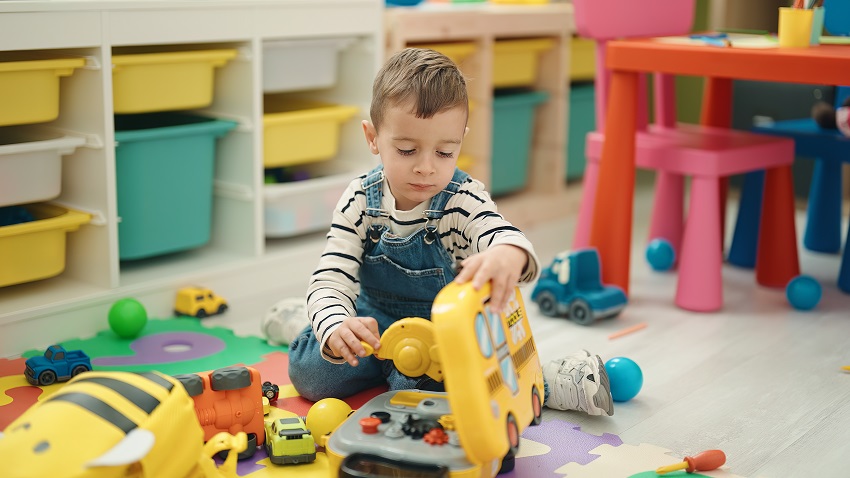
The goodbye at the classroom door is often harder on the parent than the child. Your toddler clings to your leg, the tears start, and you walk away with that heavy feeling in your chest. If this sounds familiar, take a breath. Separation anxiety is a normal stage of development, usually showing up between about 8 months and 3 years. And a quality nursery school knows exactly how to help.
Why toddlers feel it so strongly
At this age, a child has just worked out that you exist even when you’re out of sight. They haven’t yet learned that you always come back. So when you leave, it can feel enormous. It isn’t naughtiness or weakness. It’s a sign of a healthy attachment to you.
The aim of a good nursery school isn’t to stop the tears overnight. It’s to help your child feel safe enough to calm down, explore and trust that you’ll return.
A gradual start, not a sudden drop-off
The best nursery schools don’t expect a child to cope with a full day on day one. Many offer a gentle settling-in period, with short visits at first, perhaps with a parent in the room, then slightly longer stays each day. The child meets the space, the people and the routine in small, manageable steps. [Describe your own settling-in schedule, such as how many days it usually takes.]
If a school insists on a hard, immediate separation with no flexibility, that’s worth questioning.
One familiar face
Toddlers attach to people, not rooms. That’s why many modern nurseries use a key person or primary caregiver approach, where one teacher takes special responsibility for your child in the first weeks. That teacher greets them each morning, knows their comfort habits and becomes the safe person they run to when feelings get big.
Ask which teacher your child will be paired with, and what happens if that teacher is away.
Routines that say “you’re safe here”
Young children relax when they can predict what comes next. A quality nursery school builds the day around steady rhythms: arrival, play, snack, story, rest, outdoor time, pick-up. A short, consistent goodbye routine helps too, such as a wave at the window or a special phrase. Children read these rituals as reassurance.
Comfort items are welcome in the best schools. A soft toy, a blanket or a photo of the family is no cause for worry.
Calm, honest goodbyes
Teachers who handle separation well tend to be calm and kind, but not dramatic. They acknowledge the feeling (“I can see you’re sad, and I’m here”), then gently redirect the child towards something absorbing, like water play, sand or a simple puzzle. Most tears stop within minutes of a parent leaving, though it rarely feels that way from the corridor.
Parents can help by keeping goodbyes short and cheerful. Slipping out without saying goodbye may seem kinder, but it can make a child more anxious the next day because they never know when you’ll vanish.
Staying in touch with parents
Modern nursery schools use simple tools to ease a parent’s worry too. Many send a quick photo or message through a school app once a child has settled, so you can see your toddler playing while you’re at your desk. Ask how soon you’ll hear if your child is upset for longer than expected, and whether you can call during the day.
Signs the school is doing it well
-
Teachers greet your child by name and crouch to their level
- Children look busy and comfortable, not lost
- Staff turnover is low, so faces stay familiar
- The school explains its settling-in plan clearly and adjusts it for your child
When to talk to the teacher
Some children take a few weeks to adjust, and that is normal. But if distress lasts well beyond a month, or your child’s eating and sleeping change a lot, talk to the teachers early. A good nursery school will work with you, not brush your concerns aside.
Final thoughts
Separation anxiety doesn’t mean you chose the wrong nursery school, and it doesn’t mean your child isn’t ready. With patient teachers, steady routines and honest communication, most toddlers go from tears at the gate to running in with a smile. Look for a school that treats that journey seriously.